Blog

  • Essential Civil Law Rights Every Citizen Should Know

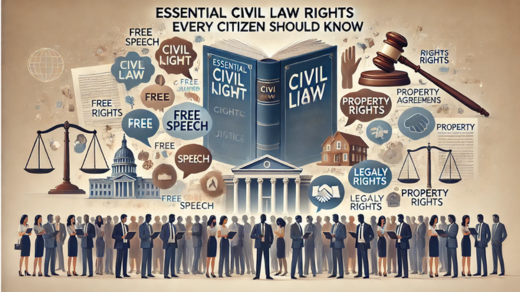
    Essential Civil Law Rights Every Citizen Should Know

    Understanding civil law rights is crucial for every citizen, as these rights form the foundation of personal freedoms and legal protections within a democratic society. Civil rights ensure that individuals can live freely and fairly, protected from discrimination and injustice. This article explores essential civil law rights that every citizen should be aware of to safeguard their freedoms and uphold justice.

    1. Right to Equality and Non-Discrimination

    One of the fundamental principles of civil law is the right to equality and non-discrimination. This right guarantees that all individuals are treated equally before the law, regardless of race, gender, religion, nationality, or any other characteristic. Discrimination based on these attributes is prohibited, and individuals are entitled to equal opportunities in various aspects of life, including employment, education, and access to public services.

    This right is essential for ensuring that everyone has an equal chance to participate in societal activities and benefit from the same opportunities. Laws and regulations are in place to prevent and address discrimination, promoting a fair and just society.

    2. Right to Freedom of Speech and Expression

    The right to freedom of speech and expression is a cornerstone of democratic societies. This right allows individuals to express their opinions, ideas, and beliefs without fear of censorship or retaliation. It encompasses various forms of communication, including spoken and written words, art, and other forms of expression.

    However, this right is not absolute and may be subject to reasonable limitations, such as restrictions on hate speech, incitement to violence, or defamation. Balancing freedom of expression with the need to protect others’ rights and maintain public order is crucial.

    3. Right to Privacy

    The right to privacy protects individuals from unwarranted interference in their personal lives. This right covers various aspects, including privacy in personal communications, protection of personal data, and freedom from unlawful searches and seizures.

    In an era of digital communication and surveillance, safeguarding privacy is increasingly important. Laws are in place to regulate how personal information is collected, stored, and used, ensuring that individuals’ privacy is respected and protected from misuse.

    4. Right to a Fair Trial

    The right to a fair trial is a fundamental aspect of civil law, ensuring that individuals are given a just and impartial hearing if they face legal proceedings. This right includes several key elements:

    • Presumption of Innocence: Every individual is presumed innocent until proven guilty. This principle is crucial for preventing wrongful convictions and ensuring that individuals are not punished without proper evidence and legal process.
    • Right to Legal Representation: Individuals have the right to be represented by a lawyer during legal proceedings. Legal representation ensures that individuals have access to professional advice and advocacy, helping them navigate the legal system effectively.
    • Right to a Public Hearing: Trials should be conducted in public to ensure transparency and accountability. Open hearings help prevent abuses of power and allow the public to observe and scrutinize legal processes.
    • Right to an Impartial Judge: Individuals are entitled to have their cases heard by an unbiased and impartial judge. This ensures that decisions are made based on evidence and the law, rather than personal biases or external influences.

    5. Right to Freedom of Assembly and Association

    The right to freedom of assembly and association allows individuals to gather, organize, and associate with others for various purposes, including political, social, and cultural activities. This right is essential for the exercise of democratic freedoms, enabling individuals to express their views collectively and advocate for change.

    While this right is protected, it may be subject to certain restrictions to maintain public order and safety. For example, authorities may regulate the time, place, and manner of public demonstrations to ensure they do not disrupt public life or infringe on others’ rights.

    6. Right to Freedom of Religion and Belief

    The right to freedom of religion and belief guarantees individuals the freedom to practice, change, or renounce their religion or belief system. This right includes the freedom to manifest one’s religion or belief through worship, teaching, and observance.

    Religious freedom is vital for respecting diverse beliefs and practices within a society. Laws and policies are designed to protect individuals from religious discrimination and ensure that everyone can freely follow their faith without fear of persecution.

    7. Right to Protection from Arbitrary Detention

    The right to protection from arbitrary detention ensures that individuals cannot be held in custody without just cause or due process. This right is fundamental for safeguarding personal liberty and preventing unlawful detention or imprisonment.

    Detention must be carried out according to established legal procedures, and individuals have the right to challenge their detention before a court. This right helps prevent abuses of power and ensures that individuals are not deprived of their liberty without legal justification.

    8. Right to Access to Information

    The right to access information allows individuals to obtain information held by public authorities and institutions. This right is essential for promoting transparency, accountability, and informed participation in democratic processes.

    Access to information enables citizens to stay informed about government activities, policies, and decisions that affect their lives. It also supports the public’s ability to hold authorities accountable and participate actively in civic life.

    9. Right to Economic and Social Rights

    Economic and social rights are essential for ensuring a decent standard of living and access to basic needs. These rights include:

    • Right to Education: Every individual has the right to access quality education, which is crucial for personal development and societal progress.
    • Right to Health: Individuals have the right to access healthcare services and enjoy a standard of health that allows them to live with dignity.
    • Right to Adequate Housing: The right to adequate housing ensures that individuals have access to safe and secure living conditions.
    • Right to Work: The right to work encompasses the ability to seek and obtain employment, fair working conditions, and protection against discrimination in the workplace.

    10. Right to Legal Remedies

    The right to legal remedies ensures that individuals who believe their civil rights have been violated can seek redress through the legal system. This right allows individuals to file complaints, pursue legal actions, and obtain compensation or restitution for harm suffered.

    Access to legal remedies is crucial for upholding civil rights and ensuring that violations are addressed and corrected. It provides a mechanism for individuals to challenge injustices and seek justice.

    Conclusion

    Understanding and protecting civil law rights is essential for every citizen to ensure a fair and just society. These rights, including equality, freedom of speech, privacy, and access to justice, form the foundation of individual freedoms and democratic values. By being aware of these rights, individuals can better advocate for themselves and others, contributing to a more equitable and respectful society.

    It is important for citizens to stay informed about their rights and how to exercise and protect them effectively. Engaging with legal resources, advocacy groups, and educational programs can help individuals better understand and uphold their civil rights in everyday life.

  • Navigating Mergers and Acquisitions – Corporate Law Essentials

    Navigating Mergers and Acquisitions – Corporate Law Essentials

    Mergers and acquisitions (M&A) are critical strategies in corporate growth, allowing businesses to expand their market presence, achieve synergies, and enhance their competitive edge. However, navigating the complexities of M&A transactions requires a solid understanding of corporate law. This article explores the essentials of corporate law in the context of mergers and acquisitions, offering a comprehensive guide to help businesses and legal professionals manage these intricate processes effectively.

    Understanding Mergers and Acquisitions

    Mergers involve the combination of two companies to form a new entity, while acquisitions occur when one company purchases another, either through buying its assets or shares. Both processes are strategic tools that can provide various benefits, such as increased market share, diversified product lines, and operational efficiencies. However, they also come with significant legal, financial, and operational challenges.

    Key Legal Considerations in M&A

    1. Due Diligence
      Due diligence is a critical phase in M&A transactions, involving a comprehensive review of the target company’s business, financials, legal matters, and operational aspects. This process helps the acquiring company assess potential risks, liabilities, and the overall value of the target. Key areas of due diligence include:
      1. Financial Statements: Analyzing historical financial performance and projections.
      1. Contracts and Agreements: Reviewing existing contracts, leases, and agreements.
      1. Legal Compliance: Ensuring adherence to applicable laws and regulations.
      1. Intellectual Property: Evaluating patents, trademarks, and other intellectual assets.
      1. Employment Matters: Understanding employee contracts, benefits, and potential issues.
    2. Effective due diligence minimizes the risk of unforeseen problems and helps in making informed decisions.
    3. Regulatory Approval
      Many M&A transactions require approval from regulatory bodies to ensure compliance with antitrust laws and other regulations. In the United States, the Federal Trade Commission (FTC) and the Department of Justice (DOJ) review transactions to prevent anti-competitive practices. Other countries have their own regulatory bodies with similar functions. Obtaining regulatory approval can involve:
      1. Antitrust Review: Assessing whether the transaction will reduce competition in the market.
      1. Sector-Specific Regulations: Complying with industry-specific rules and guidelines.
      1. International Considerations: Addressing regulations if the transaction involves foreign entities.
    4. Navigating regulatory requirements is crucial to avoid legal challenges and ensure a smooth transaction.
    5. Transaction Structure
      The structure of an M&A transaction can significantly impact its outcome and involves deciding between various options, such as:
      1. Asset Purchase: Acquiring specific assets and liabilities of the target company.
      1. Stock Purchase: Buying the target company’s shares, thereby acquiring its entire business.
      1. Merger: Combining both companies into a new entity or one company absorbing the other.
    6. The chosen structure affects legal obligations, tax implications, and integration processes, making it essential to align the structure with strategic goals and legal requirements.
    7. Contractual Agreements
      M&A transactions involve several key agreements, including:
      1. Letter of Intent (LOI): Outlining the preliminary terms and conditions of the transaction.
      1. Purchase Agreement: Detailing the final terms, including the purchase price, representations, warranties, and indemnities.
      1. Disclosure Schedules: Providing detailed information about the target company’s assets, liabilities, and other relevant data.
      1. Employment Agreements: Addressing the retention of key employees and executive compensation.
    8. Well-drafted agreements protect the interests of both parties and facilitate a clear and enforceable transaction.
    9. Post-Transaction Integration
      After the transaction is completed, integrating the acquired company or merging entities is a crucial step. This phase involves aligning operations, cultures, and systems to achieve the intended benefits of the M&A. Key considerations for successful integration include:
      1. Cultural Alignment: Managing differences in organizational culture to foster a cohesive environment.
      1. Operational Synergies: Streamlining processes and systems to realize cost savings and efficiency gains.
      1. Communication: Keeping employees, customers, and stakeholders informed about changes and expectations.
      1. Legal Compliance: Ensuring ongoing compliance with regulatory requirements and contractual obligations.
    10. Effective integration is vital for realizing the strategic objectives of the M&A and ensuring long-term success.

    The Role of Corporate Lawyers in M&A

    Corporate lawyers play a crucial role in guiding businesses through the M&A process. Their responsibilities include:

    • Advising on Strategy: Providing legal insights on the best approach to achieve strategic goals.
    • Conducting Due Diligence: Overseeing the due diligence process and identifying potential issues.
    • Drafting Agreements: Preparing and negotiating key contractual documents.
    • Navigating Regulatory Issues: Managing interactions with regulatory authorities and ensuring compliance.
    • Facilitating Integration: Advising on post-transaction integration and addressing legal challenges.

    Experienced corporate lawyers bring valuable expertise to the table, helping businesses navigate the complexities of M&A and mitigate legal risks.

    Common Challenges in M&A Transactions

    M&A transactions can encounter various challenges, including:

    • Valuation Disputes: Differences in valuation expectations between the buyer and seller can lead to negotiations and adjustments.
    • Regulatory Hurdles: Obtaining regulatory approvals can be time-consuming and may require modifications to the transaction.
    • Cultural Clashes: Merging different corporate cultures can lead to internal conflicts and affect employee morale.
    • Integration Issues: Aligning systems, processes, and teams can be challenging and may impact operational efficiency.

    Addressing these challenges proactively and seeking professional guidance can help ensure a successful M&A outcome.

    Conclusion

    Navigating mergers and acquisitions requires a thorough understanding of corporate law and a strategic approach to managing legal, financial, and operational aspects. From due diligence and regulatory approval to transaction structure and post-integration, each phase of the M&A process presents unique considerations and opportunities.

    By engaging experienced corporate lawyers, businesses can effectively manage these complexities and achieve their strategic goals. Whether you’re pursuing a merger, acquisition, or other strategic transaction, understanding the essentials of corporate law and partnering with knowledgeable legal professionals will help you navigate the M&A landscape with confidence and success.

  • 30 Key Corporate Law Questions Every Entrepreneur Should Know

    Start-up Business

    What is corporate law?

    Corporate law deals with the creation, functioning, and governance of corporations and other business forms. It determines legal rights, duties, and responsibilities.

    What are the principal forms of business organizations?

    Sole proprietorships, partnerships, LLCs, and corporations: C-corp and S-corp

    How do I determine the appropriate business structure?

    Consider the extent of liability protection, tax effect, operational complexity, and potential for growth when selecting a business structure.

    What is the difference between an LLC and a corporation?

    Also read:

    Answer: LLCs are easier to form, have pass-through taxation, and are more flexible with management, whereas corporations have a formal structure involving shareholders, directors, and officers.

    Do I need an attorney to form a business?

    Answer: No, but it would be wise to consult an attorney to ensure you comply with the state laws and draft the necessary documents correctly.

    Business Formation and Registration

    What is a corporate charter?

    Answer: A document (Articles of Incorporation) filed with the state to officially create a corporation.

    What are bylaws, and are they required?

    Answer: Bylaws are internal rules governing a corporation’s operations. While not always legally required, they are essential for proper governance.

    What is an operating agreement?

    Answer: A document outlining ownership and management rules for an LLC, including roles, responsibilities, and profit distribution.

    What is a registered agent?

    Answer: A registered agent is a person or entity authorized to receive legal and official documents on behalf of the business.

    What is an Employer Identification Number (EIN)?

    Answer: A unique number issued by the IRS for tax reporting and identification purposes, similar to a Social Security number for businesses.

    Corporate Governance

    What is the role of the board of directors?

    Answer: The board manages the corporation, makes top-level decisions, and ensures the corporation is in compliance with laws and policies.

    What is a fiduciary duty?

    Answer: A legal obligation requiring directors and officers to act in the best interests of the corporation and its shareholders.

    What is corporate liability protection?

    Answer: Protects owners’ personal assets from business debts and liabilities if the business is properly maintained as a separate entity.

    What is piercing the corporate veil?

    Answer: Owners may be held personally liable by courts for failing to keep personal and business finances separate or committing fraud.

    What is a shareholder agreement?

    Answer: A document stating the rights and obligations of shareholders in voting, profit distribution, and share transfer.

    Compliance and Reporting

    What are annual reports, and are they required?

    Answer: Many states require corporations and LLCs to file annual reports to update information about ownership, management, and contact.

    What is a certificate of good standing?

    Answer: A document from the state confirming that a business complies with regulations and is authorized to operate.

    What are the consequences of non-compliance?

    Answer: Penalties include fines, loss of good standing, dissolution, or personal liability for debts.

    Do corporations need to hold annual meetings?

    Answer: Most states require corporations to hold annual shareholder meetings to review performance and make major decisions.

    What is corporate recordkeeping?

    Record Meetings, Resolutions, Financials, and Filings

    This will help with compliance and being accountable.

    Contracts and Agreements

    Do I need written contracts for business dealings?

    Answer: Yes, to avoid confusion and potential lawsuits.

    What is a non-disclosure agreement (NDA)?

    Answer: A legally binding document that is meant to prevent parties from leaking information during discussions or partnership dealings.

    What is a non-compete agreement?

    Answer: A covenant not to compete, which limits an employee or business partner from engaging in competitive business activities in a given region for a set period.

    What is IP protection?

    Answer: Legal protection for inventions such as trademarks, copyrights, patents, and trade secrets, allowing the owner exclusive rights to the property.

    What is the purpose of employment agreements?

    Answer: Employment agreements provide details on terms and conditions of employment, employee expectations, and employer and employee rights.

    Tax and Financial Matters

    What taxes do businesses need to pay?

    Answer: Federal income tax, state taxes, payroll taxes, and possibly sales tax, depending on the nature and location of the business. What is the difference between S-corp and C-corp taxation?

    Answer: C-corps are taxed at the corporate level, while S-corps allow income to pass through to shareholders’ personal tax returns. What is double taxation in a corporation?

    Answer: Double taxation refers to the corporation paying taxes on profits and, in addition, the shareholders are taxed on their dividends.

    What is the job of a business accountant?

    Answer: An accountant assists in keeping financial records in order, filing taxes, and complying with financial requirements.

    Do I need a business bank account?

    Answer: Yes, to keep separate personal and business finances and keep liability protection in place.

    Takeaways

    Corporate law ensured that business organizations were structured, managed, and operated legally and in an efficient manner.

    Knowing about the governance, compliance, and contractual obligation can help avoid legal risks.

    Attending to legal and financial consultants can enable entrepreneurs to navigate complex laws and grow their businesses successfully.

    Knowing these questions allows for a proper foundation to be laid and running a business properly while remaining compliant with corporate laws.

  • 30 Common Family Law FAQs for Custody and Divorce

    General Divorce Questions

    What is a no-fault divorce?

    A divorce in which neither spouse is assigned blame for the failure of the marriage, citing irreconcilable differences or incompatibility.

    What is the difference between legal separation and divorce?

    Legal separation is the process in which a couple lives apart without terminating the marriage, whereas divorce is the legal dissolution of a marriage.

    What is a contested divorce?

    A divorce with the spouses holding differing views on issues like custody, property, or support that need to be thrashed out in court.

    What is an uncontested divorce?

    A divorce where parties agree on everything. In most cases, this speeds up and reduces costs.

    How long does it take to finalize the divorce?

    Also read:

    It depends on the state and the case. The timeframe varies from a few months to more than a year.

    Property and Financial Issues

    What is marital property?

    Answer: Property acquired during the marriage, usually subject to division during divorce.

    What is separate property?

    Answer: Property owned before marriage or acquired through inheritance or gifts, typically not subject to division.

    How is property divided in a divorce?

    Answer: States follow either community property (equal split) or equitable distribution (fair but not necessarily equal division) rules.

    What happens to debts in a divorce?

    Answer: Spouses share marital debt, but a court might differentiate between them about who paid them and how.

    What is alimony or spousal support?

    Answer: Alimony is a legal obligation from one spouse to provide for the financial needs of another to maintain their way of life until they are ready to live economically on their own.

    Child Custody

    What is legal custody?

    Answer: The responsibility to make primary decisions for children, including how they should be educated, healthy, and possibly religiously socialized.

    What is physical custody?

    Answer: Determines where the child lives and which parent provides day-to-day care.

    What is joint custody?

    Answer: A custody arrangement where both parents share legal and/or physical custody responsibilities.

    What is sole custody?

    Answer: One parent has exclusive legal and/or physical custody of the child, though the other parent may have visitation rights.

    How do courts decide custody?

    Answer: Courts prioritize the child’s best interests, considering factors like stability, parental fitness, and the child’s preferences.

    Child Support

    How is child support determined?

    Answer: According to state guidelines, taking into account both parents’ incomes, custody arrangements, and the child’s needs.

    Can child support be changed?

    Answer: Yes, if there is a substantial change in circumstances, such as income changes or the child’s needs.

    What happens if child support is not paid?

    Answer: Penalties include wage garnishment, license suspension, fines, or even jail time for repeated offenses.

    Does child support end at 18?

    Answer: Usually, but it can persist if the child is in high school, handicapped, or as ordered by the court order.

    Who is responsible for the child’s health care expenses?

    Answer: Courts often make both parents pay, or the health insurance provider, if one of the parents pays for health insurance.

    Visitation and Parenting Time

    What is a visitation schedule?

    Answer: A court order that describes how the non-custodial parent will spend time with the child.

    What is supervised visitation?

    Answer: Third-party supervised visits ordered often in abuse and neglect cases for the protection of the child’s safety.

    May visitation be denied?

    Answer: If visitation poses a risk to the child’s best interest, which the court shall determine.

    What is a parenting plan?

    Answer: A very specific agreement in most custody cases including custody, visitation, and decision-making authority.

    May the child decide whom to live with?

    Answer: Courts can take into account the child’s preference, often if the child is mature enough, but the ultimate decision will be based on the best interests of the child.

    Legal and Procedural Questions

    Do I need an attorney for divorce or custody cases?

    Answer: Not necessary, but it is helpful, especially in contested or complex cases.

    What is mediation in family law?

    Answer: A procedure where an impartial intermediary assists parents in reaching agreements out of court, thereby often saving time and money.

    Can custody orders be modified?

    Yes. If circumstances substantially change, affecting the welfare of the child, a custody order may be modified.

    What happens if one parent violates a custody order?

    The other parent may file a motion for enforcement, and the court may impose penalties or modify the order.

    What is a guardian ad litem?

    A: When custody disputes arise, the court appoints an advocate to represent the best interests of the child.

    Take Away

    Divorce and custody cases focus on fairness for spouses as well as on best interest for children.

    Courts most care about stability, safety, and the child’s well-being when it comes to custody and support decisions.

    Mediation and parenting plans can be useful tools to avoid battling in court during a divorce and custody dispute.

    By answering these FAQs, families would be able to understand the law process and hence make better decisions in divorce and child custody cases.

  • 25 Property Law FAQs for Buyers, Sellers, and Landlords

    For Buyers

    What is the first step in buying property?

    Answer: Obtain pre-approval for a mortgage to determine your budget, then start searching for properties that meet your criteria.

    What is a title search, and why is it important?

    Answer: A title search ensures the seller has legal ownership and that the property is free from liens or claims.

    What is the difference between a deed and a title?

    Answer: A deed is the legal document transferring title, and title represents the rights of ownership to a property.

    What is earnest money?

    Answer: A deposit made by the buyer to show serious intent; held in escrow until closing.

    What are contingencies in a property purchase agreement?

    Answer: Conditions that must be met for the sale to occur, such as inspections, financing, or appraisals.

    Also read:

    What is the closing process?

    Answer: The last step in purchasing property, where the deed is transferred, funds are paid, and the buyer receives ownership.

    What is property insurance, and do I need it?

    Answer: Property insurance protects against damages and liabilities. Mortgage lenders usually require it for homebuyers.

    What is a home inspection, and is it necessary?

    Answer: A home inspection evaluates the property’s condition, identifying issues before purchase. It’s highly recommended.

    Can I get out of buying a property?

    Answer: Yes, only for specific conditions in the purchase agreement, such as failed contingencies or financing failures.

    What is a property tax and how is it established?

    Answer: A tax levied by local governments based on the property’s assessed value. Rates may vary by location.

    For Sellers

    What is seller’s disclosure?

    Answer: A document where sellers disclose known issues or defects about the property to potential buyers.

    What happens if I don’t disclose a property defect?

    Answer: Failure to disclose known defects can lead to legal action by the buyer after the sale.

    What is staging, and why is it important?

    Answer: Staging is preparing the home for sale to make it more appealing, which may increase its market value.

    Do I need a real estate agent to sell my property?

    Answer: No, but agents provide expertise, market knowledge, and help with negotiations and paperwork.

    What is a purchase agreement?

    Answer: A legally binding contract between the buyer and seller outlining the terms of the sale, including price and conditions.

    What is a contingency in selling property?

    Answer: A condition that must be met before the sale closes, such as the buyer obtaining financing or selling their current home.

    What is escrow, and why is it used?

    Answer: Escrow ensures all conditions of the sale are met by holding funds and documents until the transaction is complete.

    What is a short sale?

    Answer: A sale where the property is sold for less than the remaining mortgage balance, usually to avoid foreclosure.

    What happens during the closing process for sellers?

    Answer: The seller transfers the deed to the buyer, pays any outstanding fees, and receives the sale proceeds after deductions.

    What are capital gains taxes?

    Answer: Taxes on the profit from selling a property. Exemptions may apply if the property was your primary residence.

    For Landlords

    What are a landlord’s obligations?

    Answer: To make the property safe and habitable, to observe local laws, and to take care of the property.

    What should be contained in a rental agreement?

    Answer: Main terms such as the amount of rent, payment period, security deposit, maintenance duties, and guidelines for tenants

    Can a landlord raise the rent whenever he feels like it?

    Answer: No, but landlords must honor local laws and the terms of the rental agreement, which might include advance notice.

    What is a security deposit, and how should it be handled?

    Answer: A security deposit is money held to cover damages or unpaid rent. Landlords must follow state laws on collection, use, and return.

    Can a landlord evict a tenant without notice?

    Answer: No, landlords must follow legal eviction procedures, including providing notice and obtaining a court order if necessary.

    Key Takeaways

    For sellers: Disclose transparently, be aware of the process of closing, and have your property ready to attract the maximum value.

    For landlords: Be aware of the legal responsibilities and have clear lease contracts with tenants. Rent and the tenant’s management should strictly comply with local law.

    The following FAQs provide vital information regarding property law, which can ease out the processes of transaction and property management by all parties involved.

  • 20 Common Questions About Consumer Protection Law Explained

    General Consumer Protection Law

    What is consumer protection law?

    Laws intended to protect consumers from unfair, deceptive, or fraudulent practices and ensure their rights in the marketplace.

    What is the purpose of consumer protection laws?

    To promote fair trade, prevent exploitation, ensure product safety, and provide remedies for grievances.

    Who enforces consumer protection laws?

    Agencies like the Federal Trade Commission (FTC) in the U.S., state consumer protection offices, and other regulatory bodies.

    What are the main principles of consumer protection?

    Right to safety, information, choice, redress, education, and protection against unfair practices.

    Consumer Rights

    Also read:

    What is the right to safety?

    Consumers have the right to be protected from products that may pose harm to health or safety.

    What is the right to information?

    Businesses must provide accurate, clear, and comprehensive details about their products and services.

    What is the right to redress?

    Consumers can claim redress for defective goods, bad services, or unfair trade practices.

    What is the right to choose?

    Consumers should be given a choice of goods and services at reasonable prices without compulsion.

    Unfair Practices

    What are deceptive trade practices?

    Misrepresentation, false advertisement, or withholding material information that deceives consumers.

    What are unfair contract terms?

    Terms that cause substantial inequalities in rights and obligations between business and consumers.

    What is bait-and-switch advertising?

    Advertising a product at a low price in order to capture consumers, and then forcing them to buy the more expensive version.

    What are the legal remedies for fraud?

    Consumers can file complaints with authorities, sue for damages, or demand refunds or replacements.

    Product and Service Standards

    What is product liability?

    The legal responsibility of manufacturers and sellers for injuries caused by defective products.

    What is the role of warranties in consumer protection?

    Warranties guarantee that a product will function as promised; consumers can seek repairs or replacements if it fails.

    What are lemon laws?

    Laws protecting consumers who buy defective vehicles, requiring repairs, replacements, or refunds.

    What protections exist for online shopping?

    Laws regulate online sales, ensure secure payments, prevent fraud, and mandate transparent terms.

    Privacy and Data Protection

    What is the role of consumer protection in data privacy?

    Laws such as the General Data Protection Regulation (GDPR) and the California Consumer Privacy Act (CCPA) safeguard personal data and privacy.

    What rights do consumers have under data privacy laws?

    The right to access, delete, or correct personal data, and to opt out of data collection.

    Dispute Resolution

    What are alternative dispute resolution (ADR) methods?

    Mediation and arbitration offer out-of-court mechanisms for resolving consumer disputes efficiently.

    What should consumers do if their rights are violated?

    File a complaint with regulatory bodies, contact consumer advocacy groups, or pursue legal action in small claims courts.

  • 30 Key FAQs About Service Law for Professionals

    General Service Law

    What is service law?

    Service law provides the legal relation between employers and employees, concerning rights, obligations, and labor law.

    .

    What is service law for?

    To set proper practices, workers’ rights protection, and regulating employer-employee relations.

    .

    What is employment contract?

    It is a contract between the two parties that deals with the employment relationship job, responsibilities, and remuneration and dispute mechanism.

     Recruitment and Employment

    What is the responsibility of employers in employment?

    Ensure nondiscriminatory practices, job descriptions free of deceitful intentions, and compliance with all labor laws.

    Also read:

    What is the legal meaning of offer letters?

    Offer letters can be considered an initial agreement. However, sometimes they do not have the binding power of a legally signed employment contract.

    Can job offers be rescinded?

    Only in limited capacities, such as failure to be accepted or non-compliance of conditions.

    Employment Rights

    What are fundamental employee rights?

    Fair wages, safe work environment, privacy, and freedom from discrimination or harassment.

    What is workplace discrimination?

    Treatments that are discriminatory in nature because of race, gender, religion, disability, or other protected characteristics.

    How are employee privacy rights protected?

    The law limits access by employers to personal data, monitoring, and use of personal information.

    Working Conditions

    What are employers’ safety obligations?

    To provide a safe, hazard-free working environment and adhere to the standards of OSHA or equivalent standards.

    What is workplace harassment?

    Unwelcome behavior that is severe or pervasive enough to create a hostile work environment, including sexual harassment or bullying.

    Legal workweek and overtime policy:

    Typically, 40 hours per week; overtime paid in accordance with federal or local laws, such as the Fair Labor Standards Act.

    Wages and Benefits

    Minimum wage:

    Lowest hourly wage set by federal, state, or local law.

    Mandatory employee benefits?

    They differ by jurisdiction but may consist of health insurance, paid leave, and retirement plans.

    What if wages are not paid or are late?

    Employees can make complaints to the labor authorities or bring a lawsuit for breach of contract.

    What is equal pay for equal work?

    A legal doctrine that holds that people working in similar positions must receive similar pay regardless of race, sex, or any other factor.

    Leave and Time Off

    What is the Family and Medical Leave Act (FMLA)?

    A U.S. law that allows eligible employees to take up to 12 weeks of unpaid leave for medical or family reasons.

    What are the rights of employees to paid vacation time?

    Vacation time is a function of company policies or local laws.

    Can an employer refuse sick leave?

    No, if the sick leave is mandated by law or covered by an employment contract.

    Termination and Resignation

    What is at-will employment?

    A system where employers or employees can terminate employment without cause, excepting discrimination or contractual limitations.

    What is wrongful termination?

    Termination that violates employment contracts or legal protections.

    What are severance packages?

    Compensation offered upon termination, which may include pay, benefits, and job placement assistance.

    Can employees resign without notice?

    It depends on the contract, but abrupt resignations may have legal or financial consequences.

    Dispute Resolution

    What is alternative dispute resolution (ADR)?

    Mediation or arbitration used to settle workplace conflicts outside of court.

    What actions can employees take against workplace discrimination?

    File internal complaints, contact the Equal Employment Opportunity Commission (EEOC), or file a lawsuit.

    How are unpaid wages recovered?

    Through complaints to labor departments or legal claims.

    Employer Responsibilities

    What is vicarious liability?

    Employers’ legal responsibility for unlawful acts committed by employees during work.

    What is constructive dismissal?

    When an employer’s actions or work conditions force an employee to resign.

    What is the employer’s duty during layoffs?

    Give notice, severance benefits if applicable, and follow labor laws.

    Legal Protective Measures

    What is whistleblower protection?

    Protections against retaliation against employees reporting illegal or unethical conduct in the workplace.

  • 20 Questions and Answers About Family Law Disputes

    General Family Law

    What is family law?

    Answer: Family law includes all legal issues regarding family relations, including marriage, divorce, child custody, and spousal support.

    What are the most common family law disputes?

    Answer: Common disputes are usually over divorce, child custody, visitation rights, child support, spousal support, and division of property.

    Do I need an attorney for family law cases?

    Answer: While not required, an attorney can be very helpful, especially in complicated cases where there are children or substantial assets.

    What is mediation in family law?

    Answer: Mediation is a voluntary process by which a neutral third party helps parties resolve disputes outside of court, often used in divorce and custody cases.

    What is the difference between legal separation and divorce?

    Answer: Legal separation is when couples live apart but are still legally married, whereas divorce legally ends the marriage.

    Divorce and Property Division

    Also read

    What is a no-fault divorce?

    Answer: A divorce in which neither spouse is blamed for the breakdown of the marriage, often citing “irreconcilable differences.”

    How is property divided in a divorce?

    Answer: Division depends on whether the state follows community property (equal split) or equitable distribution (fair but not necessarily equal).

    What is marital property?

    Answer: Property acquired during the marriage, usually subject to division, except for personal gifts or inheritances.

    How are debts divided in a divorce?

    Answer: Debts are divided just like assets, depending on whether they are classified as marital or separate obligations.

    What is a prenuptial agreement, and how does it impact divorce?

    Answer: A prenuptial agreement outlines how assets and debts will be divided in case of divorce, often simplifying disputes.

    Child Custody and Support

    What factors determine child custody?

    Answer: Courts prioritize the child’s best interests, considering factors like parental fitness, the child’s preferences, and stability.

    What is the difference between legal and physical custody?

    Answer: Legal custody involves decision-making rights, while physical custody determines where the child lives.

    Can custody agreements be modified?

    Answer: Yes, custody arrangements can be changed if there is a significant change in circumstances affecting the child’s well-being.

    How is child support determined?

    Support is determined by state guidelines, considering each parent’s income, custody arrangements, and the child’s needs.

    What happens if a parent does not pay child support?

    Consequences include wage garnishment, fines, license suspension, or even jail time in extreme cases.

    Spousal Support (Alimony)

    What is spousal support?

    Spousal support is financial support one spouse pays to the other after a divorce to help maintain their standard of living.

    How is spousal support determined?

    Answer: Courts consider factors such as the length of the marriage, each spouse’s income, age, health, and contributions to the marriage.

    Can spousal support be modified or terminated?

    Answer: Yes, it can be adjusted if there is a significant change in circumstances, such as remarriage or loss of income.

    What is temporary spousal support?

    Answer: Financial support offered in the divorce process, which is terminated once the divorce is finalized and permanent support is established.

    Is spousal support always granted?

    Answer: No, it is awarded based on the circumstances of the marriage and divorce.

    Takeaways

    Legal Support: Family law disputes are usually emotionally and financially complicated, making legal counsel beneficial.

    Alternative Solutions: Mediation and negotiation can help settle disputes more amicably and efficiently.

    Court’s Focus: The best interests of children and equitable outcomes for spouses guide decisions in family law cases.

    These FAQs provide a clear understanding of family law disputes and how to approach common challenges effectively.

  • 25 Frequently Asked Education Law Questions for Parents and Teachers

    General Education Law

    What is education law?

    Education law describes the rights and obligations of schools, teachers, students, and parents, and the way that they ensure education practice is both equitable and legal.

    Who implements education law?

    Federal, state, and local education agencies and courts implement education law and accompanying regulations.

    What are parents’ rights in education?

    Parents have a right to review their child’s educational records, be included in decisions about their child, and contest policies impacting their child.

    What rights do teachers have under education law?

    Teachers are entitled to fair treatment, freedom of speech, safe working conditions, and employment contract protections.

    Student Rights

    Also read:

    What rights do students have in public schools?

    Students have the right to free education, freedom of expression, privacy, and protection from discrimination or harassment.

    Can schools search a student’s belongings?

    Yes, but searches must be reasonable and based on legitimate suspicion.

    What is FERPA?

    The Family Educational Rights and Privacy Act safeguards the privacy of student education records and gives parents the right to access them.

    Can schools punish students for what they post on social media?

    Yes, if it interferes with school activities or violates a policy, but punishments must comport with First Amendment rights.

    Special Education

    What is the Individuals with Disabilities Education Act (IDEA)?

    A U.S. law that ensures children with disabilities receive a free and appropriate public education (FAPE).

    What is an IEP?

    A legal document describing special education services and accommodations for students with disabilities.

    What are teachers’ responsibilities under IDEA?

    To carry out IEPs, to provide accommodations, and to cooperate with parents and specialists in helping students with disabilities.

    What is a 504 Plan?

    A plan under Section 504 of the Rehabilitation Act that ensures equal access to education for students with disabilities through accommodations.

    Anti-Discrimination and Harassment

    Title IX is a federal law that prohibits sex-based discrimination in schools receiving federal funding, which includes protection against harassment.

    What should parents do if their child is bullied?

    Report the incident to school officials, document occurrences, and escalate to higher authorities or legal channels if necessary.

    What are teachers’ responsibilities regarding bullying?

    To prevent, identify, and address bullying in compliance with school policies and anti-discrimination laws.

    How do schools ensure equity in education?

    By adhering to laws such as Title VI (race), Title IX (gender), and the Americans with Disabilities Act (ADA).

    Discipline and Safety

    What are the rights of students in disciplinary procedures?

    Students are entitled to notice of charges, a hearing, and the right to be heard.

    Can schools expel students?

    Yes, but only for just cause and after due process.

    What are the rights of teachers in handling student discipline?

    Teachers can make classroom rules, but should not exceed school policies and the law.

    What are the obligations of schools towards safety?

    Schools have a responsibility to create safe environments, enforce safety policies, and meet state and federal safety regulations.

    Parental Involvement

    Can parents allow their child to opt out of certain lessons?

    Yes, if it is related to sex education or controversial issues, depending on state laws and school policies.

    Do parents have a say in school curricula?

    Parents can raise concerns or attend school board meetings, but education authorities decide the curricula.

    What rights do parents have in private schools?

    Private school rights are governed by enrollment contracts and school policies, not public education laws.

    Teacher Employment Rights

    Can teachers be dismissed without cause?

    It depends on their employment contract and tenure status. Tenured teachers usually have more job protection.

    What are teachers’ rights regarding classroom freedom?

    Teachers have limited academic freedom; they must follow the curriculum and educational standards while maintaining a respectful learning environment.

  • 20 Questions About Criminal Law and Justice Answered

    General Principles of Criminal Law

    What is criminal law?

     Criminal law refers to the set of actions prohibited by the government and the punishments associated with such actions, in order to safeguard society and keep society in order.

    What is the distinction between a crime and a civil wrong?

     A crime is an offense against the state or society, while a civil wrong is a private dispute between two individuals or parties, usually settled through compensation.

    What are the major types of crimes?

    Answer: Felonies (grave offenses such as murder), misdemeanors (lesser offenses like theft), and infractions (petty offenses such as traffic tickets).

    What is the burden of proof on defendants in criminal cases?

    Answer: The prosecution must prove the defendant’s guilt “beyond a reasonable doubt,” the highest burden of proof in the law.

    Also read:

    What are the elements of a crime?

    Answer: Most crimes require a criminal act (actus reus) and a criminal intent (mens rea) to establish guilt.

    Rights of the Accused

    What are Miranda rights?

    Answer: Rights read to a suspect during an arrest, including the right to remain silent and the right to an attorney, as established by Miranda v. Arizona (1966).

    What is the right to due process?

    Answer: The Fifth and Fourteenth Amendments ensure due process of law before depriving someone of life, liberty, or property.

    What is the right to remain silent?

    Answer: The Fifth Amendment safeguards a person’s right against self-incrimination, meaning he or she cannot be compelled to answer questions that may lead to his or her implication in a crime.

    What is bail, and how does it work?

    Answer: Bail is money paid to secure a defendant’s release before trial, ensuring their appearance in court. If they fail to appear, the bail is forfeited.

    What is double jeopardy?

    Answer: The Fifth Amendment prohibits being tried twice for the same offense in the same jurisdiction.

    Legal Processes

    What happens during an arraignment?

    Answer: The defendant is formally charged, informed of their rights, and asked to enter a plea (guilty, not guilty, or no contest).

    What is a plea bargain?

    Answer: An agreement where the defendant pleads guilty to a lesser charge or receives a reduced sentence in exchange for avoiding trial.

    What is the role of a defense attorney?

    Answer: A criminal defense attorney will represent the client, protect rights, and then develop a case against the criminal charges.

    What is a grand jury?

    Answer: A collection of citizens, which reviews and evaluates the information the prosecution brought to determine if there is any probable cause that should indict a suspect.

    How does a trial differ from an appeal?

    Answer: A trial decides guilt or innocence, but an appeal considers the conduct of the trial to ensure no errors of law influenced the result.

    Punishment and Sentencing

    What is sentencing?

    Answer: The purpose of sentencing is to punish offenders, deter crime, rehabilitate offenders, and protect society.

    What are some typical forms of sentences?

    Answer: Sentences are imprisonment, probation, fines, community service, and in some jurisdictions, capital punishment.

    What is probation?

    Answer: A court-ordered period of supervision in the community, under which offenders may avoid imprisonment if they meet certain conditions.

    What is parole?

    Answer: The conditional release of an inmate before his or her sentence ends, with the condition that he or she must behave well and comply with the parole conditions.

    What is restorative justice?

    Answer: A system of rehabilitation of offenders by reconciling them with victims and the community through dialogue and restitution.

    Key Takeaways

    Criminal law is primarily meant to uphold public safety, enforce social standards, and guard individual rights.

    Knowledge of rights under the law, such as due process and the right to remain silent, is important for traversing the system of justice.

    The criminal justice process has a number of phases, from arrest to trial and sentencing, and each has unique procedures and protections.

    Knowing these answers would help people better understand the principles of criminal law and their rights within the justice system.